


The State of the Recovery in Public Sector Jobs, Part One
Joseph van der Naald
August 25, 2021
Public-sector employment has lagged far behind the private-sector recovery since the onset of the COVID-19 pandemic. State and local governments shed roughly 1.5 million jobs in early 2020, and by mid-2021 only about half had returned. Persistent revenue shortfalls, especially in education and local government services, have slowed the rebound, with important implications for economic growth, public services, and racial and gender equity.
A Look at the New York State Budget
James Orr and Merih Uctum
February 10, 2021
New York’s FY 2022 executive budget reveals sizable pandemic-driven revenue gaps and difficult trade-offs ahead. Projections point to a $15 billion shortfall over two years, to be closed through a mix of spending cuts, tax increases, and hoped-for federal aid. The outlook hinges on economic recovery, virus control, and whether Washington delivers substantial, unrestricted support.

Melting Snowballs and the Winter of Debt
Paul Krugman
January 31, 2019
The post argues that fears of U.S. public debt are overblown. With interest rates persistently below economic growth, debt does not spiral out of control but tends to shrink relative to GDP. Obsession with austerity after the financial crisis was misguided and reduced needed public investment, ultimately harming long-term economic growth.

Immigrant Entrepreneurship in the United States
Yoshiko Oka
January 10, 2019
The proposed elimination of the International Entrepreneur Rule would worsen the decline in U.S. startup formation. As native-born entrepreneurship falls, immigrants play an increasingly vital role in business creation and innovation. Ending the Rule would remove a key pathway for high-potential foreign entrepreneurs, further reducing startups, job growth, and competitive pressure in the U.S. economy.
The Credit Crunch and the Great Recession
Paul Krugman
December 08, 2018
Reassessments of the Great Recession suggest that the housing bust, rather than financial panic, explains the depth and persistence of the downturn. Although turmoil in 2008 intensified the pace of decline, falling home prices, reduced investment, and weakened consumer demand account for most of the prolonged economic damage, underscoring the limits of explanations centered primarily on finance.
U.S. Tax Reform: Where Are We Now?
Rubaiyat Tasnim and the ESG
April 12, 2018
A panel of leading economists weighed the promises and pitfalls of the 2017 U.S. tax reform, highlighting sharp disagreements over growth, inequality, and fiscal risk. While supporters emphasized capital inflows and wage gains, critics warned of rising deficits, regressive distributional effects, and long-term pressure on social programs, underscoring unresolved tensions at full employment.

The Welfare State in the Age of Globalization
Branko Milanovic
March 05, 2018
The modern welfare state is strained by the forces that once lay beyond its design. Built on shared risks and broad participation, it now confronts rising inequality, social polarization, and large-scale migration that weaken solidarity and mass coverage. Globalization challenges the fiscal and political foundations of redistribution, raising difficult questions about sustainability and reform in advanced economies.

Why 20th Century Tools Cannot Be Used to Address 21st Century Income Inequality
Branko Milanovic
February 16, 2018
The tools that once reduced inequality—strong unions, mass education, and expansive tax-and-transfer systems—no longer deliver the same results in today’s globalized economy. Structural changes in labor markets and politics limit their effectiveness. A more durable response, the argument suggests, lies in reshaping capitalism itself through broader ownership of capital and more equal returns to skills.

How Should We Think About the Effects of Corporate Tax Cuts?
Paul Krugman
February 08, 2018
Claims that recent corporate tax cuts quickly benefit workers rest on a misunderstanding of how tax incidence works. Any wage gains from higher investment would emerge only slowly, while short-run benefits flow mainly to capital owners, including foreign investors. Once lost revenue and higher payments to existing capital are considered, the long-run gains to national income appear small and potentially negative.

Dream Hoarders: Is the Upper Middle Class Leaving Everyone Else Behind?
Andreas Kakolyris
January 30, 2018
A discussion of Richard Reeves’s *Dream Hoarders* shifted the inequality debate from the top 1 percent to the upper middle class. Panelists examined how education, housing, and inherited advantages entrench class divides, debated where to draw the fault lines of inequality, and questioned whether opportunity-hoarding by the top quintile undermines mobility and social cohesion.

Why Does It Still Not Feel Like Recovery? A Look at Industry Performance
The Economic Studies Group
November 30, 2017
The recovery from the Great Recession has been unusually slow and uneven across industries. While some service sectors have rebounded solidly, overall output growth has lagged past recoveries, and key industries such as manufacturing and finance remain weak. As interest rates rise, differences in debt exposure, investment needs, and trade sensitivity leave sectors facing sharply divergent risks.

The Future of Health Care in America: A Panel Discussion at the Graduate Center
Merih Uctum
October 31, 2017
A wide-ranging panel on U.S. health care exposed why reform remains so contentious. With most Americans satisfied with existing coverage, high costs concentrated among a small share of patients, and deep disagreements over markets versus regulation, panelists debated the Affordable Care Act’s legacy, the failure of repeal efforts, and why controlling costs while preserving broad coverage remains politically and economically difficult.
How Bad Will It Be If We Hit the Debt Ceiling?
Paul Krugman
August 19, 2017
The risk of a U.S. debt default is no longer remote, and its consequences are deeply uncertain. American debt underpins the global financial system as the ultimate safe asset, a role built on trust in governance. A temporary lapse might be absorbed, but a perceived breakdown in political credibility could shatter confidence and trigger severe economic disruption.
Which U.S. Administration is Fiscally Responsible?
Merih Uctum
July 31, 2017
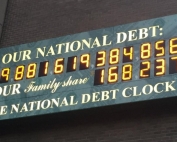
Recurring debt-ceiling crises obscure a consistent pattern in U.S. fiscal policy. Historical and econometric evidence shows that Democratic administrations have tended to reduce deficits and stabilize debt, while Republican administrations often leave higher debt burdens behind. As political brinkmanship intensifies and long-term pressures mount, uncertainty over governance risks raising borrowing costs and undermining fiscal sustainability.
El Super Clasico: Trade and Technology Duke it out at CUNY
Branko Milanovic
April 27, 2017
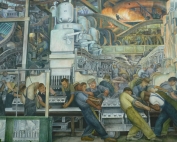
A high-profile CUNY panel revisited the debate over whether trade or technology has driven U.S. job and wage losses. While panelists differed on emphasis, they broadly agreed that China’s WTO entry delivered a large, one-time trade shock that amplified labor market disruptions, that economists underestimated trade’s concentrated costs, and that reversing globalization would be far more damaging than its initial effects. The discussion converged on a nuanced view: both trade and technology matter, but the China shock is unlikely to be repeated.

Two Theses on Health Policy
Paul Krugman
January 10 / March 7, 2017
Republicans’ struggle to replace Obamacare reflects a basic policy reality they long ignored. Universal coverage through private insurers requires regulation, mandates, and subsidies; weaken any leg and the system fails. The proposed replacement largely accepts this logic but dilutes its pillars, risking higher premiums, market collapse, and the loss of coverage for millions.

Learning about Tax Policy: Business Losses and Corporate Form
Timothy Goodspeed
January 06, 2017
The disclosure of Donald Trump’s 1995 tax losses revived basic questions about how the U.S. tax system works. Rules allowing firms to carry losses across years and pass them through to personal returns are rooted in investment timing and efforts to avoid double taxation. Yet the growing use of pass-through entities also raises concerns about equity and tax avoidance.