

Recent Articles
How Bad Will It Be If We Hit the Debt Ceiling?
Paul Krugman
August 19, 2017
The risk of a U.S. debt default is no longer remote, and its consequences are deeply uncertain. American debt underpins the global financial system as the ultimate safe asset, a role built on trust in governance. A temporary lapse might be absorbed, but a perceived breakdown in political credibility could shatter confidence and trigger severe economic disruption.
Which U.S. Administration is Fiscally Responsible?
Merih Uctum
July 31, 2017
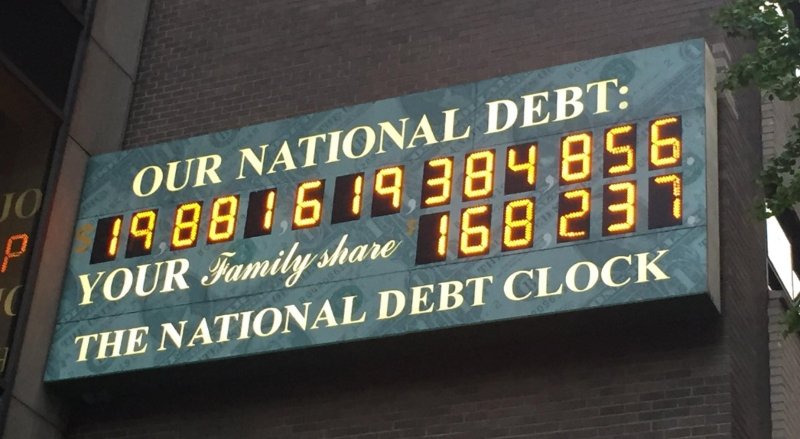
Recurring debt-ceiling crises obscure a consistent pattern in U.S. fiscal policy. Historical and econometric evidence shows that Democratic administrations have tended to reduce deficits and stabilize debt, while Republican administrations often leave higher debt burdens behind. As political brinkmanship intensifies and long-term pressures mount, uncertainty over governance risks raising borrowing costs and undermining fiscal sustainability.
Tech. Note: Which U.S. Administration is Fiscally Responsible?
Merih Uctum
July 31, 2017
We conduct a time series analysis of the government reaction function using impulse response of the primary surplus/GDP ratio to an increase in debt/GDP ratio. This is one of the metrics used in the fiscal policy literature to measure the sustainability of the public finances.

A Finger Exercise on Hyperglobalization
Paul Krugman
July 11, 2017
The surge in global trade after 1990 was driven less by tariffs than by falling transport costs and the rise of global value chains. Small reductions in trade barriers dramatically reshaped where production occurred by making cross-border assembly viable. This “hyperglobalization” fueled rapid trade growth—but its effects increasingly look like a one-time shift rather than a continuing trend.

The United States, Mexico, and NAFTA
The Economic Studies Group
June 28, 2017
U.S.–Mexico trade has expanded dramatically since NAFTA, with growth driven less by finished goods than by deeply integrated supply chains in autos, electronics, and other manufacturing sectors. Alongside these intra-industry flows, the U.S. runs a services surplus and engages in complementary agricultural trade. The evidence suggests that renegotiation risks disrupting established production networks whose benefits and costs vary sharply across industries and states.

How Important is the Finance Sector to the New York City Economy?
James Orr
June 09, 2017
Finance remains central to New York City’s economy despite a long-term decline in its employment share. While the sector employs fewer workers than in the past, it generates roughly 30 percent of citywide earnings, driven largely by the securities industry’s high wages and volatile bonus income. Ongoing challenges—including regulation, technological change, macroeconomic risk, and competition from other financial centers—will shape the sector’s future role in the city’s growth.
El Super Clasico: Trade and Technology Duke it out at CUNY
Branko Milanovic
April 27, 2017
A high-profile CUNY panel revisited the debate over whether trade or technology has driven U.S. job and wage losses. While panelists differed on emphasis, they broadly agreed that China’s WTO entry delivered a large, one-time trade shock that amplified labor market disruptions, that economists underestimated trade’s concentrated costs, and that reversing globalization would be far more damaging than its initial effects. The discussion converged on a nuanced view: both trade and technology matter, but the China shock is unlikely to be repeated.

The New York City Labor Market: Recent Developments
James Orr
April 04 / Revised April 09, 2017
Revised data show New York City added more than 90,000 jobs in 2016, outpacing both the state and the nation. The city’s post-2010 expansion reflects sustained strength beyond finance, rapid population gains, and stable labor force participation. Yet unemployment and broader underutilization remain elevated, and forecasts point to slower—though still positive—job growth ahead.