

Recent Articles
 Why 20th Century Tools Cannot Be Used to Address 21st Century Income Inequality Gallery
Why 20th Century Tools Cannot Be Used to Address 21st Century Income Inequality
Analysis Articles, Commentary, Economy, Education, Employment, Financial, Fiscal, Global, Growth & GDP, Inequality, International, Labor, Markets, National, Opinion, Policy, Productivity, Regulation, World
Why 20th Century Tools Cannot Be Used to Address 21st Century Income Inequality
Branko Milanovic
February 16, 2018
The tools that once reduced inequality—strong unions, mass education, and expansive tax-and-transfer systems—no longer deliver the same results in today’s globalized economy. Structural changes in labor markets and politics limit their effectiveness. A more durable response, the argument suggests, lies in reshaping capitalism itself through broader ownership of capital and more equal returns to skills.

How Should We Think About the Effects of Corporate Tax Cuts?
Paul Krugman
February 08, 2018
Claims that recent corporate tax cuts quickly benefit workers rest on a misunderstanding of how tax incidence works. Any wage gains from higher investment would emerge only slowly, while short-run benefits flow mainly to capital owners, including foreign investors. Once lost revenue and higher payments to existing capital are considered, the long-run gains to national income appear small and potentially negative.

Dream Hoarders: Is the Upper Middle Class Leaving Everyone Else Behind?
Andreas Kakolyris
January 30, 2018
A discussion of Richard Reeves’s *Dream Hoarders* shifted the inequality debate from the top 1 percent to the upper middle class. Panelists examined how education, housing, and inherited advantages entrench class divides, debated where to draw the fault lines of inequality, and questioned whether opportunity-hoarding by the top quintile undermines mobility and social cohesion.
A Primer on Rules of Origin in NAFTA Negotiations and What Is Next
Richard J. Nugent III
December 22, 2017
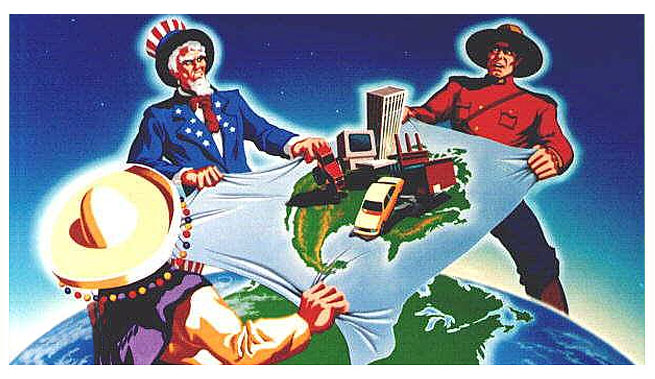
Stalled NAFTA renegotiations have put rules of origin at the center of debate, especially for autos. Tighter content requirements aim to prevent trade deflection but risk disrupting global supply chains. While ROO can protect regional production, more restrictive rules could raise costs, distort trade flows, and threaten the viability of the agreement itself.

Why Does It Still Not Feel Like Recovery? A Look at Industry Performance
The Economic Studies Group
November 30, 2017
The recovery from the Great Recession has been unusually slow and uneven across industries. While some service sectors have rebounded solidly, overall output growth has lagged past recoveries, and key industries such as manufacturing and finance remain weak. As interest rates rise, differences in debt exposure, investment needs, and trade sensitivity leave sectors facing sharply divergent risks.

Greek Debt in Historical Perspective: An Opinion Article
Anthony Rodolakis
November 22, 2017
Warnings that rising U.S. debt could mirror Greece’s crisis overlook critical historical differences. Greece’s experience reflects a long pattern of borrowing, default, and weak fiscal institutions shaped by war, politics, and external financing. Tracing two centuries of debt accumulation shows that today’s Greek crisis stems from structural and historical forces—not simply high debt levels alone.

The Future of Health Care in America: A Panel Discussion at the Graduate Center
Merih Uctum
October 31, 2017
A wide-ranging panel on U.S. health care exposed why reform remains so contentious. With most Americans satisfied with existing coverage, high costs concentrated among a small share of patients, and deep disagreements over markets versus regulation, panelists debated the Affordable Care Act’s legacy, the failure of repeal efforts, and why controlling costs while preserving broad coverage remains politically and economically difficult.

Is the New York Economy Slowing Down?
James Orr
October 26, 2017
September job losses in New York State and City raised questions about whether a long-running employment expansion is beginning to cool. While overall job levels remain above a year earlier, declines were broad-based and concentrated in key sectors, with retail trade under pressure from online shopping. Proposed federal tax changes—especially eliminating state and local tax deductions—could further affect incomes and economic activity in the region.