


New York City Employment Recovery Complete, but Uneven across Industries
Khaled Eltokhy and James Orr
January 20, 2025
New York City employment has finally returned to its pre-pandemic level, led by healthcare, professional services, and finance. Yet the recovery remains uneven as retail and hospitality lag amid remote work and shifting consumer patterns. With population changes, office attendance still below normal, and new policy uncertainties ahead, job growth is expected to slow but remain positive.

New York’s Employment Recovery: Almost There but Virus Effects Linger, New Issues Emerge
Gillian Fuchs and James Orr
January 31, 2024
Nearly four years after the pandemic shock, New York City employment has returned close to its pre-Covid peak, driven by healthcare, professional services, and finance. The recovery, however, remains uneven as retail trade lags amid remote work and shifting consumer behavior. Falling unemployment masks a smaller workforce, while asylum-related costs add new fiscal pressures.
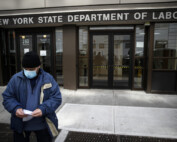
New York’s Economy Trying to Heal From the COVID-19 Crisis
Fadime Demiralp and James Orr
October 31, 2020
New York City’s economy was battered by the pandemic, with employment plunging far more sharply than in prior downturns. Although job gains rebounded quickly after the spring lockdowns, the recovery has slowed and remains uneven across industries. Lingering health risks, reduced tourism, and remote work threaten a full return to pre-COVID employment levels.

The New York Economy Amid the Coronavirus Crisis
James Orr and Zhuo Xi
April 26, 2020
The coronavirus crisis delivered an unprecedented shock to New York’s economy, with mass job losses and historic unemployment claims following statewide shutdowns. Drawing lessons from 9/11, the Great Recession, and Hurricane Katrina, this article argues that recovery will depend on federal support, local economic resilience, and medical progress, and may prove deeper and longer-lasting than past crises.

The Opioid Crisis in the New York Area: A First Look
Robert Utzinger
February 17, 2020
Deaths from suicide, alcohol, and drug overdoses have risen sharply in the United States since 2000, driven largely by opioid misuse. Examining New York and neighboring states, this article links higher mortality rates to economic stress, showing that lower minimum wages, higher unemployment, and poverty are associated with more deaths of despair, lending support to the Case–Deaton framework.

New York City Jobs Up but Growth Moderates Through the Third Quarter 2019
Meng-Ting Chen and James Orr
December 29, 2019
New York City employment continued to expand through the third quarter of 2019, with jobs up 1.6% over a year earlier—above the national rate and far stronger than statewide growth. Healthcare, information, and professional services drove gains, while finance and manufacturing declined. Job growth is expected to slow modestly in 2020 amid national and local risks.

Sturdy Job Growth in New York City Continues
James Orr
April 29, 2019
New York City employment continued its long expansion into early 2019, with jobs growing 2.0 percent year over year—outpacing both New York State and the nation. Growth varied widely by industry, led by health care, construction, and professional services, while manufacturing continued to decline. Slower but steady job growth is expected ahead.

Why is New York Job Growth Slowing?
Fadime Demiralp and James Orr
October 31, 2018
Job growth in New York City and State has continued to cool from its earlier post-recovery highs, slipping below the national pace in 2018. Slower gains in large sectors like healthcare and leisure, declines in others, and uneven regional performance are weighing on overall employment. Growth is expected to persist, but at a more moderate rate amid national and local uncertainties.

New York City Job Growth: Healthy, but Divergent Across Sectors
James Orr
March 27, 2018
Employment growth in New York City remained solid in 2017 but continued to ease from the rapid gains of earlier years. While the city still outpaced state and national job growth, slowing momentum reflects softer expansion in key sectors and persistent regional disparities. Looking ahead, service industries are expected to drive growth amid risks from national conditions and tax policy changes.

Is the New York Economy Slowing Down?
James Orr
October 26, 2017
September job losses in New York State and City raised questions about whether a long-running employment expansion is beginning to cool. While overall job levels remain above a year earlier, declines were broad-based and concentrated in key sectors, with retail trade under pressure from online shopping. Proposed federal tax changes—especially eliminating state and local tax deductions—could further affect incomes and economic activity in the region.

Rising Interest Rates, Mortgage Interest Rates, and New York Home Prices
Richmond Kyei Fordjour
September 15, 2017
Rising interest rates are often assumed to cool housing markets, yet recent data suggest a more nuanced reality. In New York and nationwide, home prices continued to climb even as mortgage rates increased. Examining mortgage–Treasury spreads reveals that relative borrowing costs and housing demand have moved largely in tandem, helping explain why higher rates have not halted price appreciation.

How Important is the Finance Sector to the New York City Economy?
James Orr
June 09, 2017
Finance remains central to New York City’s economy despite a long-term decline in its employment share. While the sector employs fewer workers than in the past, it generates roughly 30 percent of citywide earnings, driven largely by the securities industry’s high wages and volatile bonus income. Ongoing challenges—including regulation, technological change, macroeconomic risk, and competition from other financial centers—will shape the sector’s future role in the city’s growth.

The New York City Labor Market: Recent Developments
James Orr
April 04 / Revised April 09, 2017
Revised data show New York City added more than 90,000 jobs in 2016, outpacing both the state and the nation. The city’s post-2010 expansion reflects sustained strength beyond finance, rapid population gains, and stable labor force participation. Yet unemployment and broader underutilization remain elevated, and forecasts point to slower—though still positive—job growth ahead.

New York Labor Market Developments
James Orr
December 21, 2016
Employment trends in the current expansion reveal a growing divide between New York City, New York State, and the nation. The city has led job growth since 2010, supported by rapid population gains and rising labor force participation, even as growth elsewhere lagged. Still, higher unemployment and underemployment suggest the recovery’s benefits remain uneven.